Author: admin

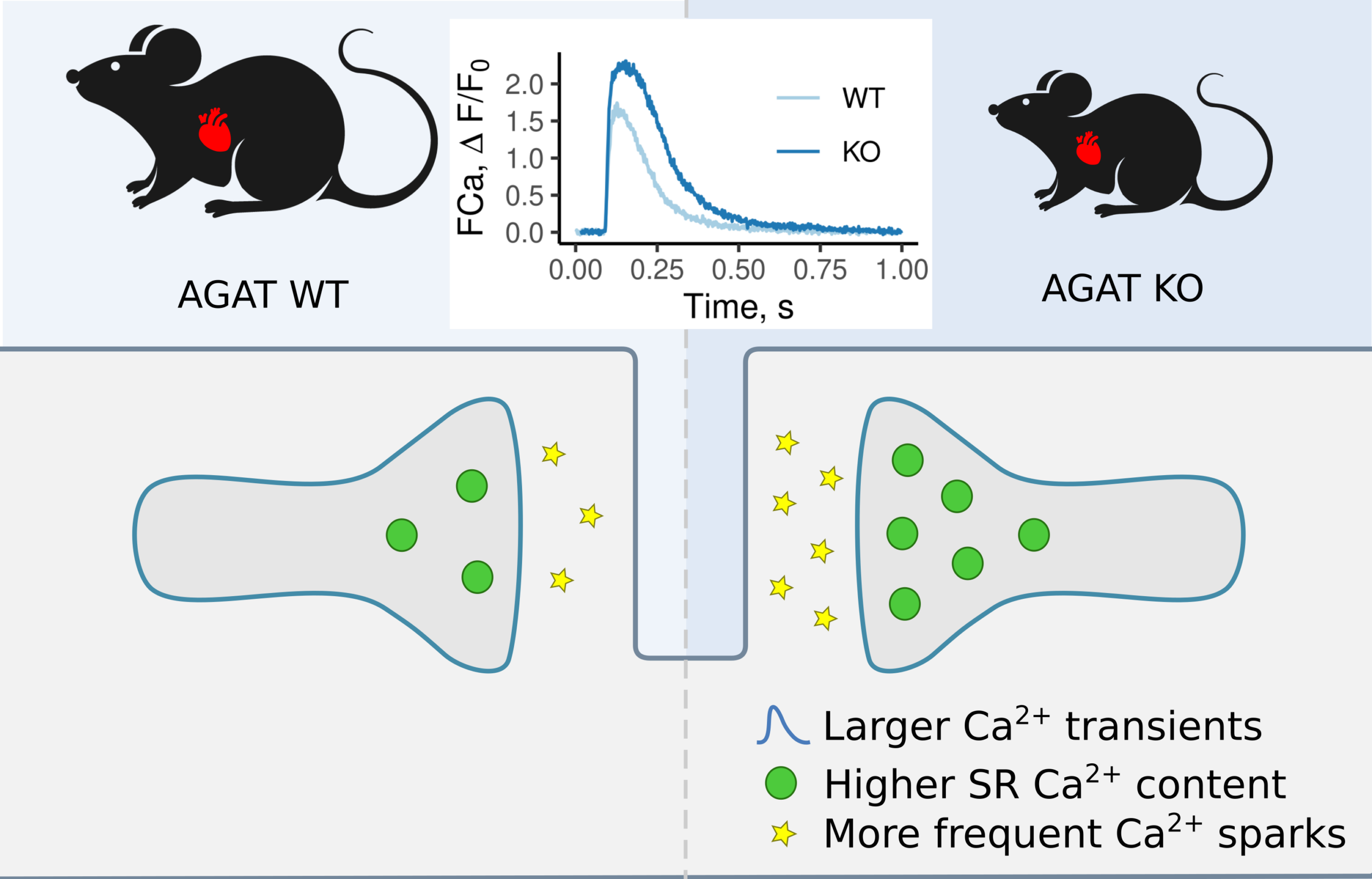
  • Lifelong creatine deficiency leads to augmented sarcoplasmic reticulum calcium release but not heart failure

    Lifelong creatine deficiency leads to augmented sarcoplasmic reticulum calcium release but not heart failure

    Jelena Branovets, Martin Laasmaa, Jekaterina Stolova, Xin Shen, Triinu Rätsepso, Romain Bernasconi, Kärol Soodla, Mihkel Jaan Balodis, Cärolin Grahv, Eliise Hendrikson, William Edward Louch, Rikke Birkedal, and Marko Vendelin

    American Journal of Physiology-Heart and Circulatory Physiology, 2025 Aug 1; 329(2): H471–H489

    Abstract

    Creatine kinase (CK) is considered a crucial energy transfer system in cardiac muscle. Some studies have suggested that reduced CK energy transfer in the heart causes energy starvation, limits cardiac performance, and ultimately leads to heart failure. In agreement with this hypothesis, the hearts from creatine-deficient mice lacking arginine:glycine amidinotransferase (AGAT KO) have been shown, in some experiments, to resemble failing hearts. However, it is unclear if AGAT KO induces changes in cardiomyocyte substructure and Ca2+ cycling that resemble heart failure, including impairment of sarcoplasmic reticulum (SR) Ca2+ release and reuptake. To investigate this, we assessed functional and structural aspects of Ca2+ handling in cardiomyocytes from KO and WT littermates. We found minor, sex-dependent differences in the organization of transverse tubules and ryanodine receptors (RyRs), no differences in the expression and relative phosphorylation of RyR and PLB, but higher S100A1 expression levels. AGAT KO cardiomyocytes exhibited larger and longer Ca2+ transients with the same decay rate as WT. Ca2+ spark frequency and SR Ca2+ content were also increased in KO, while sodium-calcium exchanger activity was unchanged. Thus, our results strongly suggest that SR Ca2+ cycling is augmented in AGAT KO hearts. Although AGAT KO hearts also exhibited increased AMPK activation, suggesting higher levels of AMP/ADP, this did not detectably impair sarcoendoplasmic reticulum Ca2+-ATPase activity. In conclusion, the changes in AGAT KO cardiomyocytes are opposite to those in failing cardiomyocytes, showing that lifelong absence of CK energy transfer does not lead to heart failure.

    NEW & NOTEWORTHY Previous studies have suggested that reduced creatine kinase (CK) activity may lead to heart failure. Here, we studied calcium handling in the hearts of creatine-deficient arginine-glycine amidino-transferase knockout (AGAT KO) mice with lifelong inhibition of CK. In contrast to failing cardiomyocyte

    In the news

    In English:

    In Estonian:

  • Looking for PhD student to study intracellular heterogeneity

    Our lab is a part of recently financed The Marie Skłodowska-Curie Actions (MSCA) COFUND program INNOCHEMBIO. Within this program, we look for a PhD student that would be interested in studying intracellular heterogeneity. For details, see

    Edit: position is filled

  • Statistical analysis of fluorescence intensity transients with Bayesian methods

    Statistical analysis of fluorescence intensity transients with Bayesian methods

    Hamed Karimi, Martin Laasmaa, Margus Pihlak, Marko Vendelin

    Science Advances 2025 Apr 18;11(16):eads4609

    Abstract

    Molecular movement and interactions at the single-molecule level, particularly in live cells, are often studied using fluorescence correlation spectroscopy (FCS). While powerful, FCS has notable drawbacks: It requires high laser intensities and long acquisition times, increasing phototoxicity, and often relies on problematic statistical assumptions in data fitting. We introduce fluorescence intensity trace statistical analysis (FITSA), a Bayesian method that directly analyzes fluorescence intensity traces. FITSA offers faster, more stable convergence than previous approaches and provides robust parameter estimation from far shorter measurements than conventional FCS. Our results demonstrate that FITSA achieves comparable precision to FCS while requiring substantially fewer photons. This advantage becomes even more pronounced when accounting for statistical dependencies in FCS analysis, which are often overlooked but necessary for accurate error estimation. By reducing laser exposure, FITSA minimizes phototoxicity effects, representing a major advancement in the quantitative analysis of molecular processes across fields.

    In the news

    In English and other languages

    In Estonian

  • Higher AMPK activation in mouse oxidative compared with glycolytic muscle does not correlate with LKB1 or CaMKKβ expression

    Higher AMPK activation in mouse oxidative compared with glycolytic muscle does not correlate with LKB1 or CaMKKβ expression

    Romain Bernasconi, Kärol Soodla, Alex Sirp, Kairit Zovo, Maria Kuhtinskaja, Tiit Lukk, Marko Vendelin, Rikke Birkedal

    Am J Physiol Endocrinol Metab. 2025 Jan 1;328(1):E21-E33

    Noteworthy

    It is important to understand how AMP-activated kinase, AMPK, is regulated, as it is a potential therapeutic target for several diseases. AMPK is activated by liver kinase B1, LKB1, and calcium/calmodulin-dependent kinase kinase 2, CaMKKβ. In cultured cells, AMPK activation correlates with LKB1 expression. In contrast, we show that AMPK-activation was higher in oxidative than glycolytic muscle, without correlating with LKB1 or CaMKKβ expression. Thus, AMPK regulation is more complex in highly compartmentalized muscle cells.

    Abstract

    AMP-activated protein kinase (AMPK) is an energy-sensing serine/threonine kinase involved in metabolic regulation. It is phosphorylated by the upstream liver kinase B1 (LKB1) or calcium/calmodulin-dependent kinase kinase 2 (CaMKKβ). In cultured cells, AMPK activation correlates with LKB1 activity. The phosphorylation activates AMPK, shifting metabolism toward catabolism and promoting mitogenesis. In muscles, inactivity reduces AMPK activation, shifting the phenotype of oxidative muscles toward a more glycolytic profile. Here, we compared the basal level of AMPK activation in glycolytic and oxidative muscles and analyzed whether this relates to LKB1 or CaMKKβ. Using Western blotting, we assessed AMPK expression and phosphorylation in soleus, gastrocnemius (GAST), extensor digitorum longus (EDL), and heart from C57BL6J mice. We also assessed LKB1 and CaMKKβ expression, and CaMKKβ activity in tissue homogenates. AMPK activation was higher in oxidative (soleus and heart) than in glycolytic muscles (gastrocnemius and EDL). This correlated with AMPK α1-isoform expression, but not LKB1 and CaMKKβ. LKB1 expression was sex dependent and lower in male than female muscles. CaMKKβ expression was very low in skeletal muscles and did not phosphorylate AMPK in muscle lysates. The higher AMPK activation in oxidative muscles is in line with the fact that activated AMPK maintains an oxidative phenotype. However, this could not be explained by LKB1 and CaMKKβ. These results suggest that the regulation of AMPK activation is more complex in muscle than in cultured cells. As AMPK has been proposed as a therapeutic target for several diseases, future research should consider AMPK isoform expression and localization, and energetic compartmentalization.

    Keywords: AMPK; CaMKKβ; LKB1; glycolytic muscle; oxidative muscle.

    In the news

    In English

    In Estonian

  • Compartmentalization in cardiomyocytes modulates creatine kinase and adenylate kinase activities

    Rikke Birkedal, Jelena Branovets, Marko Vendelin

    FEBS Letters 2024 Nov;598(21):2623-2640.

    Abstract

    Intracellular molecules are transported by motor proteins or move by diffusion resulting from random molecular motion. Cardiomyocytes are packed with structures that are crucial for function, but also confine the diffusional spaces, providing cells with a means to control diffusion. They form compartments in which local concentrations are different from the overall, average concentrations. For example, calcium and cyclic AMP are highly compartmentalized, allowing these versatile second messengers to send different signals depending on their location. In energetic compartmentalization, the ratios of AMP and ADP to ATP are different from the average ratios. This is important for the performance of ATPases fuelling cardiac excitation-contraction coupling and mechanical work. A recent study suggested that compartmentalization modulates the activity of creatine kinase and adenylate kinase in situ. This could have implications for energetic signaling through, for example, AMP-activated kinase. It highlights the importance of taking compartmentalization into account in our interpretation of cellular physiology and developing methods to assess local concentrations of AMP and ADP to enhance our understanding of compartmentalization in different cell types.

    Keywords: adenylate kinase; cardiomyocytes; compartmentalization; creatine kinase; diffusion; signaling.

  • Published Protocol: Simple Analysis of Gel Images With IOCBIO Gel Software

    Published Protocol: Simple Analysis of Gel Images With IOCBIO Gel Software

    Lucia Jaska, Rikke Birkedal, Martin Laasmaa, Marko Vendelin

    Bio-protocol, 2024 Aug 20; 14(16):e5053

    Abstract

    Gel image analyses are often difficult to reproduce, as the most commonly used software, the ImageJ Gels plugin, does not automatically record any steps in the analysis process. This protocol provides detailed steps for image analysis using IOCBIO Gel software with western blot as an example; however, the protocol is applicable to all images obtained by electrophoresis, such as Southern blotting, northern blotting, and isoelectric focusing. IOCBIO Gel allows multiple sample analyses, linking the original image to all the operations performed on it, which can be stored in a central database or on a PC, ensuring ease of access and the possibility to perform corrections at each analysis stage. In addition, IOCBIO Gel is lightweight, with only minimal computer requirements. Key features • Free and open-source software for analyzing gel images. • Reproducibility. • Can be used with images obtained by electrophoresis, such as western blotting, Southern blotting, isoelectric focusing, and more.

    Keywords: Data analysis; Electrophoresis gel; FAIR; Isoelectric focusing; Python; Reproducibility; Southern blotting; Western blotting.

  • Simple analysis of gel images with IOCBIO Gel

    Simple analysis of gel images with IOCBIO Gel

    Jaak Kütt, Georg Margus, Lauri Kask, Triinu Rätsepso, Kärol Soodla, Romain Bernasconi, Rikke Birkedal, Priit Järv, Martin Laasmaa, Marko Vendelin

    BMC Biology 2023 Oct 20;21(1):225

    Abstract

    Background: Current solutions for the analysis of Western Blot images lack either transparency and reproducibility or can be tedious to use if one has to ensure the reproducibility of the analysis.

    Results: Here, we present an open-source gel image analysis program, IOCBIO Gel. It is designed to simplify image analysis and link the analysis results with the metadata describing the measurements. The software runs on all major desktop operating systems. It allows one to use it in either a single-researcher environment with local storage of the data or in a multiple-researcher environment using a central database to facilitate data sharing within the research team and beyond. By recording the original image and all operations performed on it, such as image cropping, subtraction of background, sample lane selection, and integration boundaries, the software ensures the reproducibility of the analysis and simplifies making corrections at any stage of the research. The analysis results are available either through direct access to the database used to store it or through the export of the relevant data.

    Conclusions: The software is not only limited to Western Blot image analysis and can be used to analyze images obtained as a part of many other widely used biochemical techniques such as isoelectric focusing. By recording the original data and all the analysis steps, the program improves reproducibility in the analysis and contributes to the implementation of FAIR principles in the related fields.

    Keywords: Data analysis; FAIR; Isoelectric focusing; Reproducibility; Southern blotting; Western blotting.

  • Cardiomyocytes from female compared to male mice have larger ryanodine receptor clusters and higher calcium spark frequency

    Cardiomyocytes from female compared to male mice have larger ryanodine receptor clusters and higher calcium spark frequency

    Martin Laasmaa, Jelena Branovets, Jekaterina Stolova, Xin Shen, Triinu Rätsepso, Mihkel Jaan Balodis, Cärolin Grahv, Eliise Hendrikson, William Edward Louch, Rikke Birkedal, Marko Vendelin

    The Journal of Physiology, 601(18), 4033–4052

    Abstract

    Sex differences in cardiac physiology are receiving increased attention as it has become clear that men and women have different aetiologies of cardiac disease and require different treatments. There are experimental data suggesting that male cardiomyocytes exhibit larger Ca2+ transients due to larger Ca2+ sparks and a higher excitation-contraction coupling gain; in addition, they exhibit a larger response to adrenergic stimulation with isoprenaline (ISO). Here, we studied whether there are sex differences relating to structural organization of the transverse tubular network and ryanodine receptors (RyRs). Surprisingly, we found that female cardiomyocytes exhibited a higher spark frequency in a range of spark magnitudes. While overall RyR expression and phosphorylation were the same, female cardiomyocytes had larger but fewer RyR clusters. The density of transverse t-tubules was the same, but male cardiomyocytes had more longitudinal t-tubules. The Ca2+ transients were similar in male and female cardiomyocytes under control conditions and in the presence of ISO. The synchrony of the Ca2+ transients was similar between sexes as well. Overall, our data suggest subtle sex differences in the Ca2+ influx and efflux pathways and their response to ISO, but these differences are balanced, resulting in similar Ca2+ transients in field-stimulated male and female cardiomyocytes. The higher spark frequency in female cardiomyocytes is related to the organization of RyRs into larger, but fewer clusters. KEY POINTS: During a heartbeat, the force of contraction depends on the amplitude of the calcium transient, which in turn depends on the amount of calcium released as calcium sparks through ryanodine receptors in the sarcoplasmic reticulum. Previous studies suggest that cardiomyocytes from male compared to female mice exhibit larger calcium sparks, larger sarcoplasmic reticulum calcium release and greater response to adrenergic stimulation triggering a fight-or-flight response. In contrast, we show that cardiomyocytes from female mice have a higher spark frequency during adrenergic stimulation and similar spark morphology. The higher spark frequency is related to the organization of ryanodine receptors into fewer, but larger clusters in female compared to male mouse cardiomyocytes. Despite subtle sex differences in cardiomyocyte structure and calcium fluxes, the differences are balanced, leading to similar calcium transients in cardiomyocytes from male and female mice.

    Keywords: calcium dynamics; excitation-contraction coupling; heart; sex differences.

    In the news

  • Ontogeny of cardiomyocytes: ultrastructure optimization to meet the demand for tight communication in excitation-contraction coupling and energy transfer

    Ontogeny of cardiomyocytes: ultrastructure optimization to meet the demand for tight communication in excitation-contraction coupling and energy transfer

    Rikke Birkedal, Martin Laasmaa, Jelena Branovets, Marko Vendelin

    Philos Trans R Soc Lond B Biol Sci. 2022 Nov 21;377(1864):20210321.

    Abstract

    The ontogeny of the heart describes its development from the fetal to the adult stage. In newborn mammals, blood pressure and thus cardiac performance are relatively low. The cardiomyocytes are thin, and with a central core of mitochondria surrounded by a ring of myofilaments, while the sarcoplasmic reticulum (SR) is sparse. During development, as blood pressure and performance increase, the cardiomyocytes become more packed with structures involved in excitation-contraction (e-c) coupling (SR and myofilaments) and the generation of ATP (mitochondria) to fuel the contraction. In parallel, the e-c coupling relies increasingly on calcium fluxes through the SR, while metabolism relies increasingly on fatty acid oxidation. The development of transverse tubules and SR brings channels and transporters interacting via calcium closer to each other and is crucial for e-c coupling. However, for energy transfer, it may seem counterintuitive that the increased structural density restricts the overall ATP/ADP diffusion. In this review, we discuss how this is because of the organization of all these structures forming modules. Although the overall diffusion across modules is more restricted, the energy transfer within modules is fast. A few studies suggest that in failing hearts this modular design is disrupted, and this may compromise intracellular energy transfer. This article is part of the theme issue ‘The cardiomyocyte: new revelations on the interplay between architecture and function in growth, health, and disease’.

    Keywords: cardiomyocytes; energy transfer; excitation–contraction coupling; heart; intracellular diffusion; ontogeny.

  • Physiology in Focus 2023

    Physiology in Focus 2023

    We are participating in organizing Physiology in Focus 2023, which will be held in Tallinn, Estonia, September 14-16, 2023. Physiology in Focus 2023 is the first joint physiology meeting of the Scandinavian Physiological Society (SPS), the Federation of European Physiological Societies (FEPS), and the Baltic Physiological Societies.

    See more at the archived official website of the conference https://sps-feps-2023.publicon.ee/